In 2026, global buyers need storage systems that protect inventory, workers, and operating continuity. Impact Racks are becoming more relevant in busy warehouses, where forklifts repeatedly approach beams, uprights, and end frames. A small collision can bend steel, disturb pallet alignment, and create expensive downtime. The right rack is not simply the heaviest rack.
MHI’s 2024 Annual Industry Report identifies labor shortages, rising customer expectations, and technology investment as continuing supply-chain pressures. Its findings also show that many companies plan to increase spending on supply-chain innovation. Meanwhile, the World Bank’s Logistics Performance Index highlights infrastructure reliability and logistics competence as important factors in international trade. These trends make durable, inspectable storage equipment increasingly valuable for manufacturers, distributors, and third-party logistics providers.
This guide compares the best Impact Racks for global buyers through practical criteria. We examine load ratings, upright protection, beam design, aisle clearance, corrosion resistance, seismic requirements, and replacement-part availability. We also consider how racks perform beside charging stations, dock doors, and high-traffic forklift lanes. Standards such as EN 15635, RMI guidance, and local building codes should inform final decisions. A supplier’s test data matters, but verified site measurements matter more.
There is no universal winner.
A rack that performs well in a dry European warehouse may need different coatings in a humid coastal facility. Buyers should request engineering drawings, installation instructions, inspection procedures, and documented warranty terms. Some product claims sound impressive but lack comparable testing. That weakness deserves attention. Experienced buyers should challenge unclear specifications before placing a large international order.
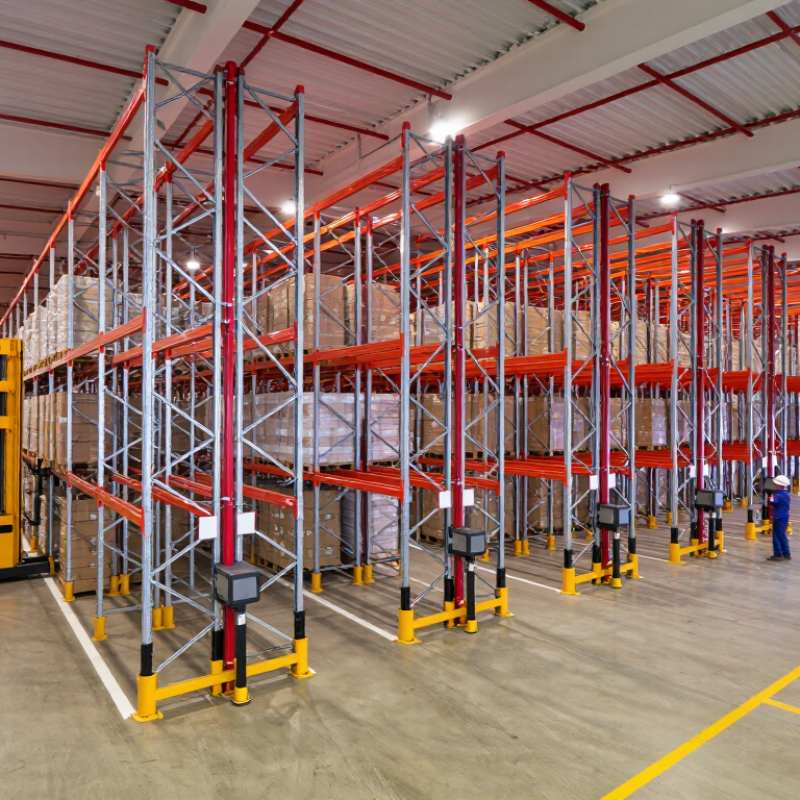
Impact racks are pallet storage systems designed to handle everyday warehouse pressure, including forklift contact, repeated loading, and shifting operational demands. They combine upright frames, beams, bracing, and protective components. The aim is not to make storage indestructible. No rack is truly impact-proof.
In a modern warehouse, impact racks support safer pallet positioning and better use of vertical space. A properly designed bay keeps cartons visible, aisles clearer, and inventory easier to access. Buyers should check load ratings, beam capacity, upright protection, anchoring methods, and floor conditions. These details matter. A rack may look strong while failing to suit uneven floors or changing pallet weights.
Practical selection begins with the site, not a product photograph. Measure aisle widths, forklift turning paths, ceiling height, pallet dimensions, and daily handling frequency. Ask for material specifications, inspection guidance, and documented testing where available. Local installation and workplace requirements should also be reviewed with qualified professionals.
One assumption deserves challenge. More steel does not always mean better performance. Overbuilt racks can reduce usable space and increase handling costs. Under-specified racks create greater risk. A balanced design usually serves global buyers better, especially when replacement parts, assembly skills, and inspection support vary between regions. Regular checks remain essential. Small dents, loose anchors, or bent beams should never be ignored.
Capacity begins with evidence, not appearance. Request the rated load per beam level, frame, and bay. Check whether ratings assume evenly distributed pallets. Uneven loading can reduce real capacity. RMI’s ANSI MH16.1-2023 specification addresses rack design loads, stability, and structural performance. However, buyers still need project-specific calculations. A warehouse engineer should verify floor strength, seismic exposure, forklift type, and aisle width. The strongest-looking rack may still be unsuitable.
Safety depends on controlling impact, not merely adding thicker steel. Inspectors should examine upright guards, anchors, bracing, beam locks, and visible deformation. OSHA 29 CFR 1910.176(b) requires stored materials to remain stable and protected from sliding or collapse. The U.S. Bureau of Labor Statistics reported 2.6 million nonfatal private-industry injuries and illnesses in 2023. That figure is not rack-specific, but it shows why storage controls deserve serious attention. EN 15635 also supports regular rack inspections and documented corrective actions. Small warning signs matter.
Durability requires realistic testing. Ask for corrosion protection details, weld-quality records, impact-test evidence, and replacement-part availability. Salt air, cold rooms, and repeated forklift contact can change performance. Do not trust a simple static load test alone. Dynamic impacts are messier. I would also question marketing claims that lack independent documentation. That is an imperfect process, but honest uncertainty is safer than false precision. Check local requirements, because seismic and fire rules differ across markets.
2026 Best Impact Racks for Global Buyers?
Global buyers need impact racks that fit real warehouse conditions, not just attractive specifications. Load capacity remains critical, but published ratings should explain beam levels, frame spacing, and safety factors. A rack holding boxed machinery needs different support from one storing irregular cartons. Clear technical drawings help purchasing teams avoid expensive assumptions.
Adjustable beams, replaceable guards, and visible locking pins improve daily maintenance. Strong upright protection matters near forklifts and busy loading zones. Powder-coated steel may suit dry interiors, while treated surfaces can perform better in humid or coastal locations. However, corrosion protection is not a universal solution. Buyers should check coating thickness, preparation methods, and local storage conditions. No rack is perfect.
Reliable documentation also matters. Suppliers should provide installation instructions, inspection guidance, material details, and test evidence from recognized facilities. Packaging deserves attention because long-distance transport can damage corners, threads, or protective finishes. Flat-pack designs may reduce shipping volume, but they can increase assembly time. That trade-off is easy to overlook. A practical evaluation should include spare-part availability, compatible accessories, lead times, and communication across time zones. User feedback from warehouses often reveals weaknesses that product sheets miss, especially around confusing assembly steps or awkward beam adjustments. Global buyers should request samples of technical documents before placing large orders. This small check can expose missing information early.
Which impact rack features matter most for global buyers in 2026?
This weighted procurement framework ranks practical buying priorities rather than company or brand performance. Structural protection and energy absorption receive the highest weights because they directly reduce rack damage and operational risk. Anchoring, visibility, replaceable parts, corrosion resistance, and compliance documentation support safer deployment across different warehouse environments and regulatory markets.
2026 Best Impact Racks for Global Buyers?
When comparing impact racks, a low unit price rarely tells the full story. Experienced buyers request load tables, engineering drawings, steel grades, weld procedures, and corrosion test records. Supplier references from warehouses with similar pallet weights can reveal practical weaknesses that brochures omit. Ask how uprights perform after forklift contact, not only how they look when new.
Compliance must match the installation site. Check applicable rack design standards, seismic requirements, fire protection rules, and local inspection procedures. Documents should identify testing methods, rated capacities, anchoring details, and traceable materials. A supplier may provide a certificate, yet the certificate might not cover the exact frame height or beam spacing. That gap deserves written clarification.
Total cost includes more than racks and delivery. Compare packaging, ocean freight, import charges, unloading equipment, installation labor, floor anchors, inspections, spare parts, and replacement lead times. Request one cost sheet with identical quantities and specifications. Small details matter: a missing anchor kit can delay installation, while weak packaging can create hidden damage. The cheapest offer may still be reasonable, but only after risk is priced honestly. My own comparison sheets have missed local labor costs before. That mistake changed the final ranking.
Benchmark comparison for warehouse pallet-rack systems and rack-protection solutions. Costs are indicative 2026 planning ranges in USD and should be validated against load drawings, site conditions, local duties, installation requirements, and inspection obligations.
| Supplier Profile | Typical Application | Common Rack Configuration | Relevant Compliance Frameworks | Impact-Protection Features | Indicative Material Cost | Installation & Freight Allowance | Estimated Total Cost | Compliance Confidence | Best Fit |
|---|---|---|---|---|---|---|---|---|---|
| Local engineered-system supplier | Single-country distribution centers, retail warehouses, and manufacturing stores | Adjustable pallet racking with bolted frames and selective access | Local building codes; EN 15512 or ANSI/RMI MH16.1 where specified; OSHA 1910.176 for U.S. workplace practices | End-of-aisle guards, upright protectors, guardrails, column shields, and floor anchoring | $90–$180 per pallet position | $35–$90 per pallet position | $125–$270 per pallet position | High when site-engineered | Short lead time and local service |
| Regional manufacturing supplier | Medium and large warehouses requiring repeatable layouts across several sites | Selective, drive-in, double-deep, or carton-flow configurations | EN 15512 structural design; EN 15635 inspection and safe-use guidance; ISO 9001 quality-management certification may be available | Replaceable upright guards, aisle-end barriers, mesh back panels, and load signage | $75–$160 per pallet position | $45–$105 per pallet position | $120–$265 per pallet position | High with traceable documentation | Balanced cost and engineering support |
| Export-oriented OEM supplier | International projects with containerized shipments and standardized components | Bolted adjustable pallet racking with modular beams and frames | EN 15512, FEM design guidance, or ANSI/RMI MH16.1 depending on project; export packaging and material traceability should be verified | Heavy-duty footplates, welded or bolted guards, frame bracing, and optional seismic design | $55–$125 per pallet position | $55–$135 per pallet position | $110–$260 per pallet position | Medium to high after third-party review | Large-volume international purchasing |
| Heavy-duty industrial specialist | Automotive, steel, machinery, cold storage, and high-load industrial operations | Heavy-duty selective, drive-in, push-back, or multi-deep racking | Project-specific structural calculations; EN 15512, ANSI/RMI MH16.1, AS 4084 where applicable, and local seismic or wind requirements | High-capacity barriers, reinforced uprights, forklift impact zones, safety gates, and engineered anchorage | $150–$350 per pallet position | $70–$170 per pallet position | $220–$520 per pallet position | High for engineered applications | High loads and severe traffic |
| Automated-storage integrator | AS/RS, shuttle, conveyor-connected, and high-throughput fulfillment facilities | Rack-supported automation with guided-load paths and controlled clearances | EN 15629 specification principles; EN 15635 safe use; applicable machine-safety, electrical, fire, seismic, and local building requirements | Protected transfer points, collision sensors, physical barriers, guided vehicles, and controlled-access zones | $300–$900 per pallet position | $180–$650 per pallet position | $480–$1,550 per pallet position | High with integrated validation | Maximum density and automation |
| Used-rack and refurbishment supplier | Budget-sensitive warehouses, temporary capacity, and non-critical storage areas | Mixed-condition selective pallet racking with replacement components | Existing equipment must be inspected and re-rated; compatibility with EN 15635, ANSI/RMI MH16.1, or local rules must be demonstrated rather than assumed | New upright guards, repaired or replaced frames, anchor checks, load plaques, and condition reports | $35–$95 per pallet position | $35–$100 per pallet position | $70–$195 per pallet position | Variable; inspection is essential | Low initial cost with controlled risk |
| Turnkey design-and-installation contractor | Projects requiring survey, layout, permits, installation, training, and handover documentation | Application-specific combination of pallet, cantilever, carton-flow, and protective systems | Local building and fire codes; selected EN, ANSI/RMI, or AS standards; documented handover, inspection, and maintenance procedures | Integrated guardrails, bollards, rack protection, pedestrian segregation, signage, and impact-reporting process | $110–$280 per pallet position | $90–$220 per pallet position | $200–$500 per pallet position | High when scope is documented | Complex projects and single-point accountability |
They handle routine warehouse pressure, including forklift contact, repeated loading, and changing storage demands. No rack is truly impact-proof.
Measure aisle width, forklift turning paths, ceiling height, pallet dimensions, and floor strength. Small measurement errors can cause large operating problems.
Selective pallet racks provide direct access to every pallet. Their open layout supports varied stock sizes and clearer forklift movement.
Drive-in racks suit high-volume goods with fewer stock-keeping units. They offer dense storage, but deep lanes reduce access flexibility.
Adjustable beams, replaceable guards, and visible locking pins simplify daily checks. Loose anchors and bent beams need immediate attention.
Review beam levels, frame spacing, pallet weight, and stated safety factors. Uneven or damaged pallets can reduce real capacity.
Not always. More steel can reduce usable space and increase handling costs. Balanced design is often more practical.
Dock areas may need stronger guards than controlled aisles. Humid locations may require suitable surface treatment and closer corrosion checks.
Yes, when practical. A small test can reveal awkward beam adjustments, assembly confusion, or poor forklift clearance.
Request technical drawings, material details, installation guidance, inspection instructions, and test evidence. Spare parts and packaging details also matter.
Flat-pack designs may reduce shipping volume but increase assembly time. I may underestimate this trade-off without site-specific labor information.
Impact Racks are essential warehouse storage systems designed to protect pallet loads and rack structures in high-traffic environments where forklifts frequently operate. This guide explains how they support modern warehouses and compares key types for cold storage, distribution centers, manufacturing facilities, and other demanding environments. It also outlines how to assess load capacity, impact resistance, structural stability, corrosion protection, and long-term durability before making a purchase.
For global buyers in 2026, important features include modular design, easy installation, adjustable components, replaceable protection parts, clear load ratings, and compatibility with different warehouse layouts. The article also offers practical guidance on comparing suppliers, product quality, safety documentation, testing procedures, compliance standards, delivery capabilities, and after-sales support. By considering purchase price alongside installation, maintenance, replacement, shipping, and operating costs, buyers can select Impact Racks that provide reliable protection, efficient storage performance, and better total value over their service life.

Xinyi Racking