10 Best Types of Warehouse Racking for 2026?

Time:2026-11-19 Author:Henry
0%

Warehouse Racking decisions shape how safely and efficiently a warehouse uses its floor space. A system that suits a busy distribution center may slow down a parts warehouse with different products, equipment, or picking routines. The right choice depends on pallet dimensions, load weights, inventory turnover, aisle width, ceiling height, and the forklifts already in use. Small details matter. A few inches can affect clearance and access.

This guide explores ten warehouse racking types for 2026, including selective pallet racks, double-deep racks, drive-in and drive-through racks, push-back racks, pallet-flow racks, carton-flow racks, cantilever racks, mobile racks, and mezzanine systems. Each offers useful advantages, but none is a universal fix. High-density storage can reduce access to individual pallets; faster picking may require more space. That trade-off is easy to underestimate on a drawing. It looks different on a busy shift.

We’ll compare how each system handles storage density, product access, and common warehouse needs. We’ll also note practical questions to check before planning a layout, such as rack capacity, aisle clearances, floor conditions, and compatibility with handling equipment. Confirm specifications with qualified professionals and the relevant manufacturers before installation. A rack is only as dependable as its design, inspection, and everyday use.
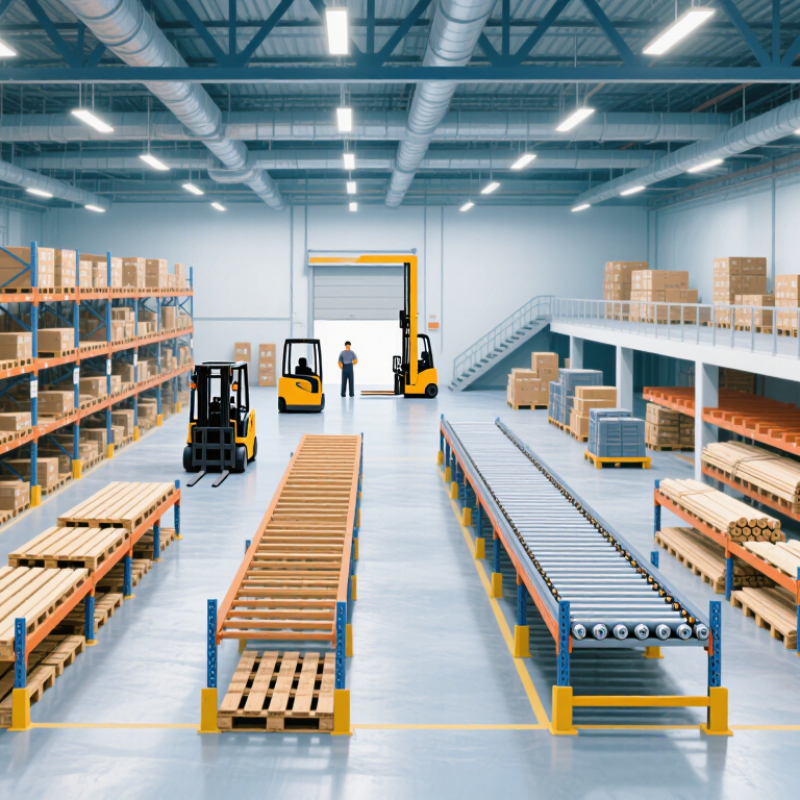
10 Best Types of Warehouse Racking for 2026?

How Warehouse Racking Systems Work and Differ

Warehouse racking systems support, organize, and expose stored goods, but they handle inventory in different ways. Selective pallet racks use individual bays, so forklifts can reach each pallet directly. That changes everything. This layout suits varied products, though it usually needs wider aisles than high-density options.

Drive-in racks let forklifts enter deep lanes, placing pallets on side rails. They save floor space but limit access to pallets behind the front position. Push-back systems use nested carts; each new pallet pushes earlier pallets backward, then gravity brings them forward during picking. Pallet-flow racks use rollers instead, keeping loading and picking ends separate. Both favor rotating stock, but their moving parts need inspection. Not always simple.

Other designs solve different storage problems. Cantilever arms hold long items such as pipe or timber without front columns. Carton-flow lanes use gentle rollers to bring small boxes toward pickers. Shelving suits hand-picked goods, while mezzanines add usable levels when building height allows. Mobile racks move along floor tracks, reducing fixed aisles but slowing access when a bay must be opened. Shuttle systems use powered carriers inside deep lanes, adding throughput and equipment complexity. A common planning mistake is choosing density before mapping pick frequency, pallet dimensions, and forklift turning space. Measure the real loads, check rack capacity with a qualified designer, and leave room for imperfect operations. A layout that looks efficient on paper may frustrate workers at the busiest hour.

10 Common Warehouse Racking Types: Typical Inventory Flow

How common rack configurations support FIFO (first in, first out) and LIFO (last in, first out) stock rotation.

A value of 1 indicates a flow method commonly supported by the listed configuration; it is not a capacity or performance rating. Selective, mobile, and shuttle systems can be configured for different inventory flows. Cantilever racks are generally used for long or irregular loads, so FIFO/LIFO is not applicable in the same way as pallet or carton flow.

Selective and Double-Deep Racking for Pallet Access

Selective racking gives operators direct access to every pallet position. That matters when a warehouse carries many product lines or handles frequent order changes. A forklift can reach a specific load without moving another pallet first. The layout is straightforward, too. But wide aisles can consume valuable floor space, so measure turning clearance and actual equipment dimensions before fixing the rack plan.

Double-deep racking places one pallet position behind another, reducing the number of aisles needed. It can suit operations with several pallets of the same product and predictable rotation. There is a catch. The rear pallet is less accessible, and operators generally need a reach truck designed for the deeper position. Check pallet condition, load dimensions, and rack capacity together; a slightly oversized load can interfere with safe retrieval. Not every site has room for the required equipment.

The choice depends on more than storage density. Compare SKU variety, daily picks, replenishment timing, and aisle space using real inventory data. A small trial area can reveal awkward turns or slow put-away before a full installation. It may feel less efficient on paper. Walk the proposed routes anyway, and have a qualified rack designer verify clearances, floor conditions, and load ratings.

Drive-In, Drive-Through, Push-Back, and Pallet-Flow Racking

10 Best Types of Warehouse Racking for 2026?

Drive-In, Drive-Through, Push-Back, and Pallet-Flow Racking

Drive-in racking lets forklifts enter deep lanes, storing pallets several positions behind the aisle. It suits high-volume goods with few product varieties, but typically follows last-in, first-out rotation. A damaged pallet or uneven floor can disrupt a whole lane. Drive-through racking provides access at both ends and can support first-in, first-out rotation when loading and picking are managed consistently. That extra access requires more aisle space.

Push-back racking stores pallets on nested carts. Each new pallet pushes the previous one deeper, making it useful when operators need more selectivity than drive-in storage offers. It generally follows last-in, first-out rotation, and cart movement needs regular checks. Pallet-flow racking uses inclined rollers to move pallets from the loading side toward the picking face. It can support first-in, first-out handling and steady replenishment, though pallet dimensions and condition affect smooth flow. Small mismatches matter.

Tips: Measure pallet loads, forklift clearance, and aisle widths before choosing a system. Check floor levelness and confirm the required stock rotation with warehouse staff. Test a representative lane with actual pallets; specifications alone may miss awkward handling habits. Don’t overlook maintenance access.

10 Best Types of Warehouse Racking for 2026? - Drive-In, Drive-Through, Push-Back, and Pallet-Flow Racking

Racking Type Pallet Access Storage Density Rotation Method Typical Configuration Best Suited For Main Trade-Off
Selective Pallet Racking Direct access to each pallet Low to medium FIFO or LIFO, depending on picking practice Single-deep rows with forklift aisles Many SKUs, mixed pallet quantities, and frequent stock rotation High selectivity, but wider aisles and access lanes use more floor space
Double-Deep Racking Direct access to the front pallet; rear pallet requires a reach truck Medium to high Usually LIFO within each two-pallet position Two pallet positions deep Fewer SKUs with multiple pallets per SKU and a need for more storage per aisle Reduced selectivity and dependence on suitable reach-truck equipment
Drive-In Racking Forklift enters the rack lane; access is generally from one end High Typically LIFO Multiple pallets deep and often several levels high Large quantities of a limited number of SKUs, such as seasonal or bulk goods Lower selectivity; pallets and rack structure need protection from truck impacts
Drive-Through Racking Forklift enters from either end of the lane High Can support FIFO when loading and unloading are managed from opposite ends Multiple pallets deep with access at both ends High-volume products where through-lane movement or stock rotation is useful Requires access aisles at both ends, which can reduce the space saved
Push-Back Racking Access from the aisle; pallets move on nested carts or inclined rails High LIFO Several pallet positions deep per lane; depth varies by system design Multiple pallets per SKU with more selectivity than deep-lane drive-in storage Not a true FIFO system; cart and rail maintenance is required
Pallet-Flow Racking Load from one end and pick from the opposite end High FIFO Inclined roller or wheel lanes move pallets by gravity Fast-moving, date-sensitive, or lot-controlled pallet goods Higher system complexity; pallet condition and lane design affect flow
Carton-Flow Racking Cartons or totes are replenished from the rear and picked from the front Medium to high for piece-picking areas FIFO Inclined flow lanes integrated into shelving or rack bays Case picking, order assembly, and small-item fulfillment Designed for cartons or totes rather than full pallet storage
Mobile Pallet Racking Direct access through an aisle opened where needed High Usually FIFO or LIFO, depending on the layout Rack rows mounted on powered or manually operated mobile bases Cold storage, archives, or sites where floor space is limited Only one or a small number of aisles may be open at a time; requires controls and safety systems
Cantilever Racking Open-front access to stored loads Low to medium Typically managed by SKU and handling sequence Uprights with projecting arms; single- or double-sided layouts Long, bulky, or irregular items such as pipe, lumber, and sheet material Not intended for standard pallet loads unless specifically designed for them
Automated Storage and Retrieval System (AS/RS) Automated equipment retrieves loads from storage locations High to very high, depending on system design System-directed; can support FIFO or other inventory rules Crane- or shuttle-based systems in defined aisles or storage structures High-throughput operations with consistent loads and suitable automation needs Higher capital and integration requirements; needs planned maintenance and operational support

Planning note: Storage capacity, aisle width, load limits, and system suitability depend on the pallet, building, equipment, seismic conditions, and applicable codes. Have the proposed layout and rack design reviewed by qualified professionals before installation.

Carton-Flow, Cantilever, and Mobile Racking for Specialized Storage

Specialized storage works best when rack geometry follows the goods. Carton-flow racks suit fast-moving cartons and small parts. Gravity rollers move replenishment stock toward the picking face, supporting first-in, first-out rotation when lanes are loaded and picked correctly. Keep cartons within each lane’s size and weight limits; poor fit can cause jams. Small details matter.

Cantilever racks handle long, awkward loads such as timber, pipe, or metal sections. Their open fronts make loading easier, but arm capacity and column spacing must match the actual load. Mobile racks place shelving on movable bases, reducing the number of fixed aisles. They can improve storage density, though only one aisle may be accessible at a time. Operators should test picking flow and emergency access before committing to a layout.

These choices deserve careful measurement, not just a density target. MHI’s 2024 Annual Industry Report reported that 55% of surveyed supply-chain professionals planned to spend over $1 million on supply-chain technology in the following two years. That figure is not a rack-performance benchmark, but it signals growing investment in warehouse systems.

Measure carton dimensions, load weights, replenishment frequency, and aisle needs on site. A layout can look efficient on paper and still frustrate pickers. I would revisit it after a real shift.

Mezzanine Racking and How to Choose a System for 2026

Mezzanine racking can turn unused vertical space into a working storage level, picking area, or light assembly zone. Unlike a simple shelf, it adds a structure people and equipment may use every day. The design should account for stored loads, floor capacity, column placement, stairs, guardrails, and access routes. Small details matter. A pallet jack needs room to turn, while a busy stair landing can slow picking. Measure clear height, not just the warehouse roof height. Sprinklers, lighting, and overhead doors may reduce usable space. That part is easy to overlook.

For a 2026 project, start with the work process, then compare structural and rack-supported designs. A rack-supported mezzanine may use storage uprights as part of its support system, while a structural system can offer more open space below. Neither is automatically better. Check load assumptions with a qualified designer, and confirm that the existing floor and building can handle the proposed loads. Map daily travel paths before fixing stair and lift locations. Leave room for future changes, but avoid paying for capacity with no clear use. One imperfect first sketch often reveals more than a polished layout: mark actual pallet sizes, handling equipment, and peak-season stock. Recheck the plan with warehouse staff before ordering.

FAQS

What is the main benefit of selective racking?

Every pallet position is directly accessible. This helps warehouses with many product lines or frequent order changes.

When can double-deep racking be a good fit?

It can reduce aisle space when several pallets share a product and stock rotation is predictable. Rear pallets are harder to reach.

What should operators check before choosing double-deep racking?

Check pallet condition, load dimensions, and rack capacity together. Confirm that the site can accommodate the required reach truck.

How does carton-flow racking support picking?

Gravity rollers move replenishment cartons toward the picking face. This can support first-in, first-out rotation when lanes are loaded and picked correctly. Small details matter.

What goods are suited to cantilever racks?

Cantilever racks can store long, awkward items such as timber, pipes, or metal sections. Arm capacity and column spacing must match the loads.

What is a trade-off with mobile racking?

Movable bases can reduce the number of fixed aisles and increase storage density. Usually, only one aisle is accessible at a time.

How can a warehouse test a rack layout before installing it fully?

Set up a small trial area and walk the proposed routes. Watch for awkward forklift turns, slow put-away, and blocked picking paths.

Which measurements matter when comparing rack systems?

Use real inventory data, including SKU variety, daily picks, replenishment timing, aisle needs, carton sizes, and load weights. Paper plans can mislead; I would check them after a real shift.

Conclusion

Warehouse Racking systems shape how goods move, how much space a facility can use, and how quickly workers can reach stored items. Selective racking offers direct access to each pallet, while double-deep racking stores pallets two positions deep to increase capacity at the cost of some access flexibility. Drive-in and drive-through designs use lanes for dense storage; push-back and pallet-flow systems help manage deeper inventory, with flow designs supporting orderly stock rotation.

Specialized options address different storage needs: carton-flow racks suit small items picked by hand, cantilever racks hold long or irregular loads, and mobile racking moves rows to open access aisles as needed. Mezzanine systems add usable levels above the floor and can combine storage with work areas. Choosing a system for 2026 means weighing inventory variety, access frequency, rotation needs, available floor space, load requirements, and future growth to find a practical balance between capacity and efficient operations.

Henry

Henry

Henry is a dedicated marketing professional with a profound expertise in the company's offerings. With years of experience in the industry, he possesses an impressive understanding of the market dynamics and consumer behaviors that drive success. Henry is committed to sharing his insights through......