Choosing the right Steel Platforms begins with understanding how people, equipment, and materials will use them every day. A platform supporting workers beside machinery requires different protection than one holding storage loads. The wrong choice can create vibration, congestion, premature wear, or difficult maintenance access. Small details matter.
An experienced site review should record load weights, traffic patterns, operating temperatures, available space, and exposure to moisture or chemicals. Measure twice. A clear layout often reveals problems that a product brochure cannot show. Engineers should verify structural capacity, deflection, connections, guardrails, stairs, and access points against applicable industry standards. Material selection also deserves careful thought. Galvanized steel may suit outdoor conditions, while coated or stainless options can perform better in corrosive environments. However, the most expensive material is not automatically the safest or most practical choice.
Consider installation time, inspection access, future expansion, and cleaning requirements before approval. A modular design may reduce disruption, but its connections still need careful examination. Ask suppliers for load data, drawings, certifications, and maintenance guidance. Their answers should be specific, not vague promises. I have seen projects focus heavily on initial price and overlook transport, drilling, and shutdown costs. That approach often creates expensive revisions later. Even a well-designed platform may require adjustment after workers test the real workflow. Good decisions combine verified engineering with practical experience. The goal is not simply to buy Steel Platforms. It is to create a stable, accessible, and durable working environment that remains dependable under real operating conditions.
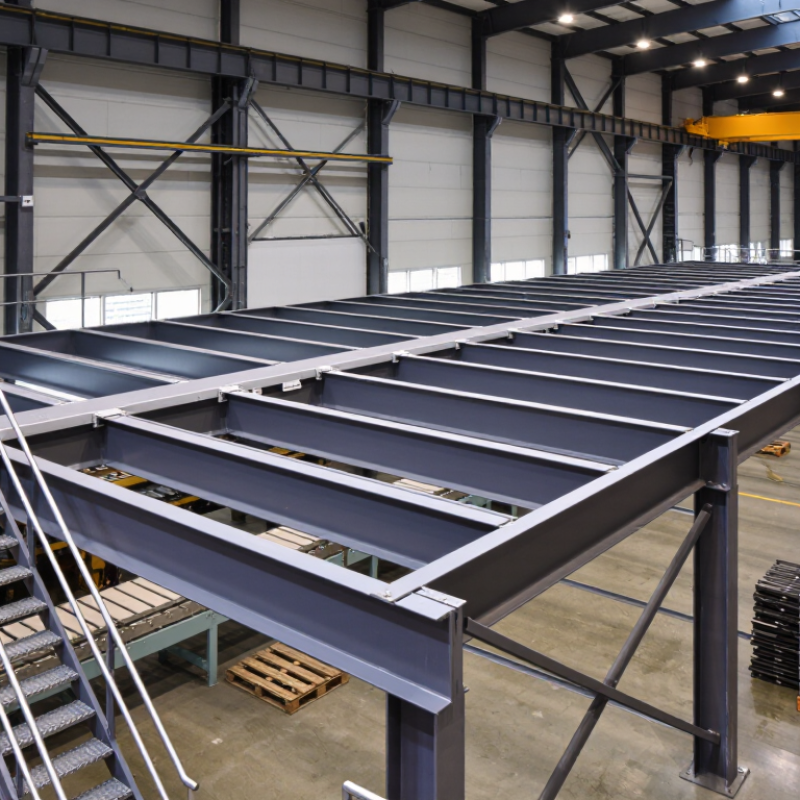
For light manufacturing, use 125 psf as a planning benchmark, not an automatic answer. The 2024 International Building Code, Table 1607.1, lists 125 pounds per square foot for light-manufacturing floors. That equals roughly 6 kPa. Still, every platform needs a site-specific review. Add the platform’s dead weight, stored materials, workers, equipment, and possible impact loads. A platform carrying cartons differs greatly from one supporting a mixer or inspection machine.
Look beyond evenly distributed load. A pallet jack may place concentrated force on two wheels. Machine feet can create higher reactions at small contact areas. ASCE/SEI 7-22 provides the broader framework for live loads, load combinations, and unusual effects. Ask for equipment weights, operating speeds, vibration data, and maintenance access before selecting beams or grating. Small details matter. A 125 psf design can still perform poorly if deflection affects a door, conveyor, or precision instrument.
Steel selection should also consider corrosion, fire protection, connections, stairs, and guardrail loads. AISC 360-22 supports structural steel design checks for strength and serviceability. In field reviews, inadequate stiffness is often missed because the platform does not collapse; it simply feels uncomfortable underfoot. That is not a satisfactory result. Recheck future storage, because today’s “light” use may become denser next year. The benchmark helps, but it should never replace measured loads and qualified engineering judgment.
Selecting A36 or A572 Grade 50 changes the platform’s strength margin, not its basic stiffness. ASTM A36/A36M specifies a 36 ksi minimum yield strength, while ASTM A572/A572M Grade 50 specifies 50 ksi. Their minimum tensile strengths are approximately 58 ksi and 65 ksi, respectively. These figures come from material standards, not marketing claims.
A36 often suits light-duty platforms, maintenance walkways, and short spans with modest equipment loads. Its wider availability can simplify sourcing and replacement. A572 Grade 50 may reduce plate thickness or member weight when structural calculations permit it.
However, higher yield strength does not automatically reduce vibration or deflection. AISC 360-22 uses a steel elastic modulus near 29,000 ksi for structural design, so geometry still controls service performance. That detail is easy to overlook.
Check the mill test report before fabrication. Confirm yield strength, tensile strength, thickness range, and heat identification. For welded platforms, review the grade’s chemistry and the approved welding procedure.
A stronger plate can still perform poorly beside weak connections, undersized welds, or flexible grating.
In field inspections, I would examine bolt holes, weld toes, bearing points, and the floor’s rebound under moving loads. A572 Grade 50 is not always the better choice. Sometimes the heavier A36 design is simpler, more forgiving, and less expensive to maintain. ASTM A36/A36M, ASTM A572/A572M, and AISC 360-22 provide the technical basis for that decision.
Choosing a steel platform starts with its serviceability, not only its load capacity. A platform may safely carry equipment yet feel uncomfortable underfoot. For many walking surfaces, engineers use an L/360 deflection limit. Here, L means the unsupported span, measured in the same units as the allowable movement. A 3,600 mm span permits about 10 mm of deflection.
Deflection should be checked under realistic service loads. Include workers, stored materials, handrails, grating, and equipment. Do not rely only on the steel’s ultimate strength. Vibration also matters, especially on platforms near rotating machinery or regular foot traffic. A stiff-looking beam can still produce noticeable movement if its natural frequency matches repeated activity. Field observations, connection stiffness, and support conditions can change the result. A clean spreadsheet is useful, but it can still miss a loose connection or flexible grating panel.
Tips: Confirm the governing local code and the platform’s actual use. Specify both vertical deflection and vibration limits before fabrication. Ask for calculations showing span, load combinations, member stiffness, and connection assumptions. Walk the proposed layout mentally: imagine two people crossing, a trolley stopping, or a pump starting. Small details matter. I have seen designs meet L/360 yet feel unpleasant because vibration was never reviewed. If the platform supports delicate instruments, use stricter criteria and consider testing after installation. Leave room for inspection, adjustment, and an honest review when site conditions differ from drawings.
How to Choose the Right Steel Platforms for Your Needs?
Steel platforms should be selected around the hazards workers face, not only the deck size or load rating. OSHA 29 CFR 1910.29 requires guardrail top edges to measure 42 inches, plus or minus 3 inches, above the working surface. Specify 42-inch rails whenever practical. This gives workers a clear visual boundary beside stairs, machinery, and open edges. Rail strength also matters. OSHA requires top rails to withstand 200 pounds of force without excessive deflection.
Toe boards deserve equal attention. OSHA generally requires toe boards to be at least 3.5 inches high. Specifying 4-inch toe boards provides a modest safety margin and helps contain tools, bolts, and loose materials. Keep the gap below the toe board within the applicable limit, and check corners for openings. Small gaps can become real problems.
The Bureau of Labor Statistics reported 885 fatal workplace injuries involving falls, slips, and trips in 2023. That figure represented about one-fifth of all fatal work injuries. A platform may meet the basic dimensions and still perform poorly if rails are loose, corroded, or difficult to inspect. Review the platform after installation. Look for sharp edges, unstable connections, blocked access, and standing water. A perfect specification cannot correct careless maintenance. That part is often underestimated.
| Platform Type | Best-Suited Application | Typical Access Method | Recommended Guardrail Configuration | Toe Board Requirement | Mobility | Key Selection Considerations |
|---|---|---|---|---|---|---|
| Fixed Elevated Work Platform | Permanent workstations around machinery, production lines, tanks, or maintenance areas. | Stairway or fixed industrial ladder. | Top rail at approximately 42 inches above the working surface, with an intermediate rail or equivalent protection. | Provide a toe board with a minimum vertical height of 4 inches where falling objects could endanger workers below. | Stationary | Verify structural capacity, anchorage, floor loading, corrosion resistance, clearances, and safe access at every entry point. |
| Access Platform with Stairway | Frequent personnel access between floor levels and elevated equipment. | Fixed stairs with handrails and guardrails. | Use a top rail near 42 inches, intermediate protection, and compliant handrails along stairs. | Install 4-inch toe boards at exposed platform edges where tools or materials could fall. | Stationary | Assess stair width, tread depth, riser uniformity, landing size, handrail clearance, headroom, and traffic direction. |
| Rolling Steel Work Platform | Short-duration maintenance or inspection tasks performed at multiple nearby locations. | Integrated steps, stairs, or ladder access. | Full perimeter guardrails with a top rail approximately 42 inches high; lockable casters or stabilizers are essential. | Use 4-inch toe boards on exposed sides where objects may fall from the deck. | Mobile when unoccupied | Check caster capacity, wheel locks, platform stability, deck slip resistance, maximum travel conditions, and safe-use procedures. |
| Mezzanine Work Platform | Expanding usable floor space for storage, production, inspection, or equipment support. | Stairs, ship ladders, or fixed ladders, depending on the design and use. | Guard all open sides with a top rail near 42 inches, intermediate protection, and a self-closing gate at material access points. | Provide 4-inch toe boards along exposed edges and around openings where falling objects are possible. | Stationary | Confirm live-load requirements, column layout, seismic or wind conditions where applicable, fire protection, and material-handling access. |
| Machine-Access Platform | Routine operation, adjustment, cleaning, and maintenance of elevated equipment. | Fixed stairs, crossover stairs, or industrial ladder. | Install a continuous top rail at approximately 42 inches and provide intermediate protection around open edges. | Add 4-inch toe boards where equipment, tools, or parts could fall to a lower level. | Stationary | Consider operator sightlines, emergency egress, pinch points, hot surfaces, guarding interfaces, drainage, and cleanability. |
| Crossover Platform | Safely crossing conveyors, pipes, ducts, and other obstructions without stepping over equipment. | Stairs on one or both sides. | Provide guardrails on both sides of the elevated crossing, with a top rail near 42 inches and protected stair approaches. | Use 4-inch toe boards on exposed platform and stair-side edges where falling objects present a hazard. | Stationary | Evaluate crossing width, stair angle, landing clearance, overhead obstructions, handrail continuity, and visibility. |
| Loading or Material-Handling Platform | Transferring pallets, containers, tools, or components between floor levels. | Stairs, ladder, forklift-access opening, or controlled loading gate. | Guardrails should remain in place except at the loading opening; use a compliant gate or removable barrier designed for the task. | Install 4-inch toe boards on exposed edges, with appropriate protection at loading openings. | Stationary | Specify rated load capacity, impact protection, pallet dimensions, gate operation, forklift interaction, and edge protection. |
| Outdoor Steel Service Platform | Access to rooftop equipment, utilities, tanks, or exterior inspection points. | Weather-resistant stairs or fixed ladder. | Use a corrosion-resistant guardrail system with a top rail approximately 42 inches above the deck and intermediate protection. | Provide 4-inch toe boards where dropped tools or materials could affect people or equipment below. | Stationary | Account for corrosion, wind, rain, ice, drainage, slip resistance, grounding, roof membrane protection, and maintenance access. |
Safety specification note: OSHA general industry rules commonly reference a top rail height of approximately 42 inches, plus or minus 3 inches, and a minimum 4-inch toe-board height where toe boards are required. Always verify the specific OSHA standard, applicable industry requirements, and site conditions before fabrication or installation.
Choosing a steel platform begins with verifying its design, not comparing prices. AISC 360-22 establishes strength and serviceability requirements for structural steel. ASCE 7-22 defines dead, live, wind, seismic, snow, and other design loads. These loads should reflect the platform’s actual location and use.
Connections deserve close inspection. Bolts, welds, base plates, and supporting beams must transfer forces safely. A platform may look oversized, yet a small connection can control the entire design. Field reviewers often check drainage, access, guardrails, and deflection because drawings may not show daily operational problems. A neat spreadsheet is not proof. Recheck assumptions.
Corrosion can change the decision. The NACE IMPACT Study estimated global corrosion costs at about 2.5 trillion dollars annually, equal to roughly 3.4% of global gross domestic product. Coatings, galvanizing, stainless components, drainage gaps, and inspection access should be priced together. Initial cost alone is misleading. Compare installation, maintenance, downtime, and replacement exposure across the platform’s service life. A cheaper system may become expensive after several wet seasons. Climate and chemical exposure matter. So does neglected maintenance. Consult a qualified structural engineer, document calculations, and request material certificates before fabrication. Even experienced teams can miss a drainage detail. That possibility should shape the budget.
No. Use 125 psf, about 6 kPa, as a planning benchmark. Include platform weight, workers, stored materials, equipment, and impact loads. The real site conditions matter more.
Review concentrated wheel loads, machine feet, vibration, and maintenance activities. A pallet jack can load two small wheel areas heavily. Small contact points may control the design.
Yes. Excessive deflection can affect doors, conveyors, instruments, and worker comfort. A platform may not collapse. That does not make it acceptable.
Yes. Today’s light storage may become denser next year. Review cartons, pallets, containers, and changing equipment plans. Future use is often underestimated.
A36 steel can suit short spans, maintenance walkways, and modest equipment loads. It is commonly available and may simplify replacement. A heavier design can sometimes be the wiser choice.
No. Higher yield strength improves strength margin, not basic stiffness. Member size, span, connections, and geometry still control movement. Stronger steel is not magic.
Review the material test report, yield strength, tensile strength, thickness, and heat identification. For welded work, confirm chemistry and the approved welding procedure. Paperwork matters here.
Specify guardrails near 42 inches high, within the permitted tolerance. Design rails to resist a 200-pound force without excessive movement. Add toe boards about 4 inches high to contain tools and bolts. Check corners and openings carefully.
Look for loose rails, corroded steel, sharp edges, blocked access, and standing water. Check bolts, weld ends, bearing points, and floor movement. Maintenance is part of the design.
Choosing the right Steel Platforms begins with a clear understanding of how the platform will be used and the loads it must support. For light-manufacturing areas, a preliminary benchmark of 125 pounds per square foot can help establish capacity requirements, while equipment, materials, personnel, and dynamic loads should also be considered. Selecting the appropriate steel grade is equally important: A36 steel may suit standard applications, while A572 Grade 50 can provide greater strength for demanding designs.
Serviceability should be evaluated alongside strength. Engineers should verify that deflection remains within an L/360 limit and assess vibration risks to maintain user comfort and equipment performance. Safety features should include 42-inch guardrails and 4-inch toe boards where required. Finally, the design should be checked against recognized structural standards, including AISC 360 and ASCE 7, with careful attention to connections, corrosion protection, installation conditions, maintenance, and total cost. A balanced review of these factors helps ensure a durable, safe, and cost-effective platform.

Xinyi Racking