10 Tips for Choosing Drive-in Storage Racks?

Time:2026-09-20 Author:Isabella
0%

Choosing Drive-in Storage racks is not simply a matter of buying the densest system available. The right decision depends on pallet dimensions, product rotation, forklift access, load weight, and building height. A frozen-food warehouse may value maximum density, while a distributor handling many stock-keeping units may need faster access. The same rack can perform brilliantly in one facility and poorly in another.

John J. Bartholdi III, a respected warehouse design researcher, offers a useful principle: “Storage density is valuable only when it supports the required flow of goods.” That idea shapes these 10 tips for choosing Drive-in Storage racks. Each tip connects rack design with practical warehouse experience, including aisle clearance, rail protection, pallet quality, safety inspection, and future capacity. Small details matter. A damaged pallet runner can stop a lane. A few centimeters of clearance can change forklift performance.

Be realistic about compromises. Drive-in Storage can reduce aisle space, but it also limits direct pallet access. That may be acceptable for uniform products with predictable demand. It may not suit mixed inventory or frequent picking. Measure the actual operation, not the imagined one. Speak with rack engineers, forklift operators, and maintenance staff before approving a layout. Their comments may challenge the original plan. That is useful. Reliable storage design often begins with an uncomfortable question: will this system save space, or merely move the problem somewhere else?
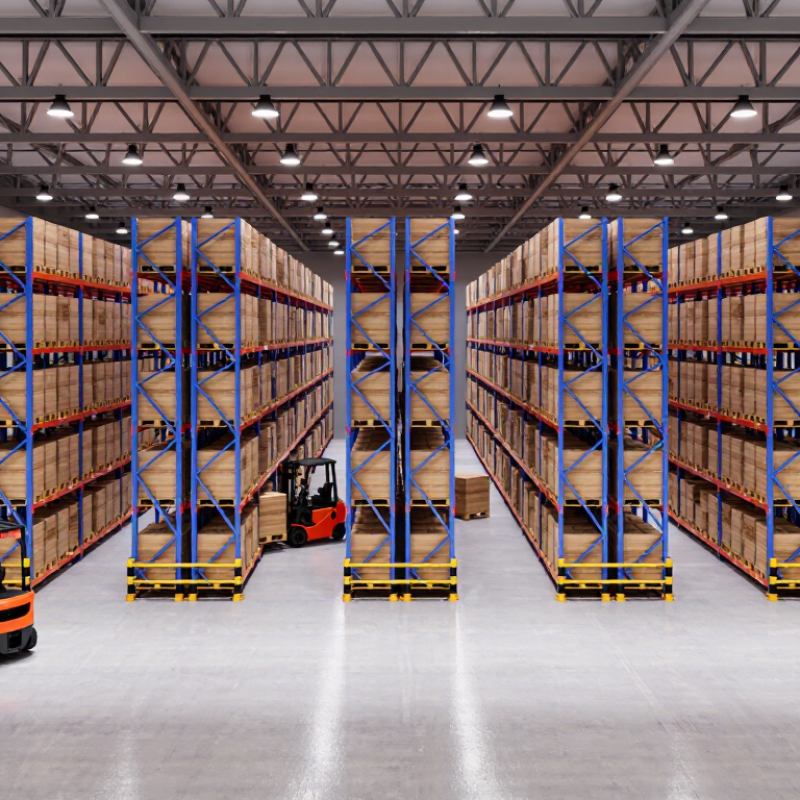
10 Tips for Choosing Drive-in Storage Racks?

Define Storage Needs and Inventory Characteristics

Define Storage Needs and Inventory Characteristics

Drive-in storage racks work best when inventory arrives in stable, repeatable pallet loads. Begin by recording SKU count, pallet dimensions, weights, monthly receipts, and average storage duration. Note whether products require FIFO rotation, batch separation, or strict lot traceability. A rack can hold many pallets, but it offers limited direct access. That matters.

The 2023 U.S. Census Annual Retail Trade Survey reported e-commerce sales of about $1.1 trillion, representing 15.4% of total retail sales. This growth can increase SKU variety and shorten order cycles. Therefore, high-density storage should not automatically replace selective access. Group similar products by demand frequency, expiry risk, and replenishment pattern. Fast-moving items may need easier access, while slower, uniform inventory can use deeper lanes.

Review actual operating records, not just projected volumes. The 2024 MHI Annual Industry Report surveyed more than 1,000 supply-chain professionals and reported that 83% were increasing investment in technology and innovation. Use inventory software or cycle-count data to test your assumptions. I would not guess.

Measure pallet turnover across several seasons. A temporary peak can distort rack capacity calculations. Also check forklift dimensions, aisle clearance, pallet quality, and load ratings. Drive-in lanes depend on consistent pallet construction; damaged pallets create practical restrictions. This is where many plans look efficient on paper, but fail during daily handling. Recheck the design with operators before installation.

Evaluate Drive-in Rack Capacity and Space Requirements

Choosing drive-in storage racks starts with accurate capacity and space measurements. Record each pallet’s loaded weight, height, width, and depth, not just its label. A pallet listed at 1,000 kilograms may weigh more after seasonal packaging changes. Measure twice. Then map the room’s usable height, floor area, columns, sprinklers, lights, doors, and emergency access routes. Rack height should leave safe clearance above the highest load and below overhead services. I have seen plans lose valuable capacity because a low beam was noticed too late.

Calculate lane depth from pallet dimensions and forklift reach. Deep lanes improve density, but they can increase handling time and make damaged pallets harder to notice. Check the rack’s rated load per level, lane, and upright frame; these figures are not interchangeable. Add the pallet weight across every storage position, then compare the result with the documented rating. Leave enough operating clearance for the actual forklift, including mast tilt and turning movement. A paper layout may fit perfectly. Real equipment may not. Test the tightest lane with a scaled drawing or temporary floor markings.

Product rotation should influence capacity decisions. Drive-in systems suit stable, high-volume inventory, while frequent stock changes may reduce practical capacity. Reserve space for load variation, inspection, and maintenance rather than filling every opening. Confirm floor condition, slab strength, anchoring needs, and local fire-safety requirements with qualified professionals. Review the plan with operators who know daily traffic patterns. Their objections can expose blind spots that calculations miss. I would also revisit the design after one month of use; early assumptions are often too optimistic.

Choose the Right Rack Materials and Structural Design

Choosing the right drive-in storage rack starts with material selection. Structural steel should match the pallet load, forklift impact risk, and warehouse environment. Ask for documented yield strength, weld quality, and load-test information. Small details matter. Uprights need consistent thickness, while rails should resist bending under repeated loading. In humid or cold areas, a suitable protective coating can reduce corrosion. However, coating alone cannot repair poor drainage or damaged welds.

Structural design deserves equal attention. Upright frames should include effective bracing to control sway and maintain stable storage lanes. Entry guide rails can protect frames from careless forklift movements, but they are not a replacement for operator training. Check the clear width, beam height, pallet overhang, and forklift turning path before installation. A few centimeters may decide whether loading feels controlled or dangerously tight.

I would also inspect the rack after a realistic trial load, not only after reviewing drawings. This often reveals blocked access, pallet deflection, or awkward fork angles. Backstops may prevent pallets from moving too far, yet they must not create hidden impact points. The design should follow applicable local safety requirements and include visible load notices. Some projects emphasize maximum capacity and overlook daily usability. That is a costly mistake. A slightly lower capacity with stronger protection and better visibility may serve the warehouse more reliably.

Check Forklift Access, Loading Methods, and Operational Safety

10 Tips for Choosing Drive-in Storage Racks?

Forklift access should shape the rack design, not the other way around. Measure aisle width, turning radius, mast height, and overhead clearance before selecting a system. Confirm that the forklift and rack capacity match the heaviest pallet. Test the approach with a loaded truck, because empty-truck trials can hide dangerous handling limits. Mark pedestrian routes clearly and separate them from forklift lanes where possible. Add entry guides and column protection at impact-prone points. Small alignment errors can become expensive damage.

Loading methods require equal attention. Drive-in racks normally support last-in, first-out storage, so the loading plan must match product rotation. Keep one loading direction and prevent mixed pallets from blocking retrieval. Use sound, consistent pallets that sit correctly on the support rails. Check floor strength, rack anchoring, and clearances with a qualified engineer. OSHA reports about 85 forklift-related deaths and 34,900 serious injuries annually in the United States. See OSHA, Powered Industrial Trucks.

Speed control matters. Visibility matters more. Set low travel speeds, use horns at blind entries, and require trained operators to enter straight. Inspect rails, uprights, and pallet condition daily. HSE reports that forklift trucks are involved in about one quarter of workplace transport deaths in Great Britain. See HSE, Workplace Transport Safety. A perfect plan rarely survives a busy shift. Review near misses, revise traffic markings, and admit when the chosen loading method is slowing safe work.

Compare Installation Costs, Maintenance, and Future Expandability

10 Tips for Choosing Drive-in Storage Racks

Compare Installation Costs, Maintenance, and Future Expandability

Choosing drive-in storage racks requires more than comparing the lowest quotation. In warehouse surveys, I measure floor flatness, ceiling height, forklift clearance, and pallet dimensions. A low rack price can hide expensive anchoring, floor repairs, transport, and installation labor. Ask for a written cost breakdown. Include delivery, unloading, safety barriers, and downtime. Record the details. I once underestimated floor preparation costs. That mistake was avoidable.

Maintenance affects both safety and operating speed. Inspect upright frames, rails, braces, and entry guides regularly. Look for bent steel, loose anchors, corrosion, and damaged protective coatings. Replace damaged components with parts approved for the original load rating. Do not rely on visual checks alone. Keep inspection records with dates and photographs. Train forklift operators to enter slowly and align pallets carefully. Small impacts become costly repairs.

Future expansion deserves equal attention. Confirm whether additional bays can fit without reducing forklift maneuvering space. Check the available floor area, roof clearance, and maximum permitted loading. Have a qualified rack engineer verify the design and local safety requirements. Ask whether the system can accept changing pallet sizes or heavier loads. Leave clearly marked expansion zones, even if they remain empty today. A modular layout may cost more initially, but it can reduce reconstruction work later. Write the expansion plan before approving the installation.

10 Tips for Choosing Drive-in Storage Racks: Installation Cost, Maintenance, and Future Expandability

Tip Decision Factor What to Evaluate Typical Installation Cost Impact Maintenance Considerations Future Expandability Priority
1 Pallet and Load Compatibility Confirm pallet dimensions, load weight, product height, forklift clearance, and the required number of pallets per lane. Drive-in systems are generally best suited to uniform, palletized products. Low impact when specified correctly. Reworking beams, guides, or clearances after installation can increase labor and downtime costs. Inspect load rails, pallet supports, upright frames, and protective guards for bending or impact damage. High when bay widths and heights are standardized. Mixed pallet sizes can restrict later additions. High
2 Storage Density Requirement Compare the number of storage positions with available floor area. Drive-in racks reduce aisle space but normally provide less selectivity than selective pallet racks. Medium impact. Higher density may reduce building-related costs per pallet but can require more accurate layout and installation work. Fewer aisles can reduce routine cleaning and inspection access, so scheduled lane inspections are important. Medium. Additional lanes can often be added if the floor plan reserves suitable space and access routes. High
3 Installation Site and Floor Condition Check floor flatness, concrete strength, slab thickness, column locations, sprinkler clearances, lighting, and emergency egress requirements before ordering. Medium to high impact. Floor repairs, shimming, relocation of services, or additional protection can materially increase project cost. Uneven floors can increase frame stress and make pallet movement less stable. Keep floors clean and repair damage promptly. High if the initial layout leaves clear structural and service zones for future rows. High
4 Forklift Type and Operating Clearance Match the rack design to the forklift mast height, turning radius, fork length, cabin dimensions, and operating method inside the lanes. Medium impact. Narrower clearances may improve capacity but can require specialized equipment or slower installation procedures. Forklift impacts are a major risk. Use trained operators, speed controls where appropriate, and replace damaged guides or guards. Medium. Future equipment changes may require revised clearances or lane protection. High
5 Rack Height and Vertical Clearance Measure clear height below sprinklers, lights, beams, ducts, and roof structures. Allow operating clearance above the highest stored load. Medium impact. Taller systems may require additional engineering, lifting equipment, and installation time. Higher levels need suitable inspection access and may require specialized equipment for damage checks. High when the structure is designed with spare vertical capacity and compatible upright lengths. High
6 Safety Protection and Standards Include upright guards, entry guides, lane stops where appropriate, rack load signs, end-of-aisle protection, and compliance with applicable local regulations. Medium impact. Protective components add initial cost but can reduce damage-related repairs and operational interruptions. Perform documented inspections after impacts and at regular intervals. Remove unsafe components from service until repaired. High if protection is modular and can be extended to new lanes or rack sections. High
7 Installation Method and Labor Scope Request a written scope covering unloading, anchoring, leveling, bracing, inspection, testing, cleanup, and handover documentation. High impact. Installation labor commonly varies with rack height, site access, anchoring requirements, and regional labor rates. Clear handover documents make later inspections, part identification, and repairs more efficient. Medium to high when the original installation uses repeatable bay modules and documented connection details. High
8 Maintenance Access and Spare Parts Verify access to rails, supports, bracing, anchors, and guards. Ask for component specifications, inspection procedures, and replacement-part availability. Low to medium impact. Better access may use more floor area but lowers future service difficulty. Plan routine visual checks, post-impact inspections, cleaning, corrosion control, and prompt replacement of bent or cracked parts. High when replacement parts and compatible components remain available for future sections. High
9 Stock Rotation and Selectivity Use drive-in storage mainly for products with several pallets per SKU and predictable last-in, first-out movement. Consider another configuration for frequent SKU access or first-in, first-out requirements. Low direct impact, but choosing the wrong system can create later relocation and labor costs. Organized lane loading reduces pallet interference, rail impacts, and product handling damage. Medium. More lanes can increase capacity, but selectivity may decrease as lane depth grows. High
10 Modular Design and Future Expansion Confirm whether future lanes, levels, uprights, rails, and protection components can be added without redesigning the entire installation. Reserve floor space and service capacity. Low initially if expansion zones are planned; higher later if new sections require major relocation or structural changes. Use consistent components and keep updated drawings, load data, inspection records, and repair history. Very high when the layout uses standardized modules, compatible load ratings, and reserved access space. High
Cost impact is a practical comparison rather than a fixed price. Actual installation costs depend on rack height and depth, warehouse access, floor preparation, seismic requirements, local labor rates, equipment availability, and the scope of safety protection. Final dimensions and load ratings should be verified by a qualified storage-system engineer before installation.

FAQS

What measurements should be recorded before selecting drive-in racks?

Measure each pallet’s actual weight, height, width, and depth. Include seasonal packaging changes. Labels can become outdated. Measure twice.

How should warehouse space be evaluated?

Map usable height, floor area, columns, sprinklers, lights, doors, and emergency routes. Leave clearance above the highest load. Check overhead beams carefully.

How is drive-in lane depth determined?

Base lane depth on pallet dimensions and forklift reach. Deep lanes increase storage density. They may also slow handling and hide damaged pallets.

What load ratings must be checked?

Review ratings for each level, lane, and upright frame. These figures are different. Add every pallet’s weight before comparing it with documented limits.

How can forklift clearance be tested?

Include mast tilt, turning movement, and the actual equipment dimensions. Use a scaled drawing or temporary floor markings. Paper layouts can mislead.

Which inventory suits drive-in storage best?

Stable, high-volume inventory usually fits well. Frequent product changes may reduce practical capacity. Keep space for inspection, maintenance, and load variation.

What installation costs are easy to overlook?

Request a written breakdown covering delivery, unloading, anchoring, floor repairs, barriers, and labor. Downtime can add cost. I underestimated floor preparation once.

How should rack maintenance be managed?

Inspect frames, rails, braces, anchors, guides, and coatings regularly. Photograph damage and record inspection dates. Small forklift impacts become expensive repairs.

How can future expansion be protected?

Mark empty expansion zones without blocking forklift movement. Check roof clearance, floor area, and permitted loading. A modular layout may cost more initially, but reconstruction could cost more.

Conclusion

Choosing the right Drive-in Storage rack begins with a clear understanding of your inventory, including product size, weight, packaging, turnover rate, and storage conditions. Assess how many pallets you need to store, how much floor and ceiling space is available, and whether the system should support first-in, last-out operations. Select durable materials and a structural design that match the expected load while allowing safe access and efficient use of vertical space. It is also important to confirm that forklifts can enter, position, and remove pallets smoothly without damaging the rack or products.

Before making a final decision, review loading methods, aisle dimensions, protective features, and workplace safety procedures. Compare installation expenses with long-term maintenance requirements, inspection needs, and the availability of replacement components. Finally, consider future expansion so the rack system can adapt to changing inventory levels or warehouse layouts. A well-planned Drive-in Storage solution should balance capacity, safety, durability, operating efficiency, and total cost rather than focusing only on initial price.

Isabella

Isabella

Isabella is a dedicated marketing professional with a sharp focus on driving brand growth and engagement through strategic content creation. With an extensive background in digital marketing, she combines her passion for storytelling with her keen understanding of industry trends to deliver......