China has become a major sourcing destination for Push-Back Storage racks. Global buyers often compare price, load capacity, customization, and delivery reliability. Yet a competitive quotation is only the beginning.
“Good warehouse design starts with product flow, not with the rack itself,” says logistics consultant Kevin Smith. This principle matters when evaluating Chinese rack manufacturers. A well-designed push-back system can store multiple pallets deep while reducing forklift travel and improving aisle efficiency. Each pallet moves on nested carts or inclined rails. The visible result is simple: denser storage with fewer aisle interruptions.
Small details reveal manufacturing quality. Buyers should inspect welded joints, beam thickness, cart rollers, rail alignment, and safety stops. Ask for load calculations, surface-treatment specifications, installation guidance, and product testing records. Factory photographs help, but independent inspections provide stronger evidence. Certifications should match the destination market and the actual rack configuration.
The best supplier is not always the cheapest. That is a hard lesson. A low initial price may exclude engineering support, spare parts, or replacement carts. Buyers also need clear answers about pallet dimensions, temperature conditions, turnover rates, and forklift compatibility. These factors influence whether Push-Back Storage performs smoothly or creates daily delays.
China’s leading manufacturers offer useful advantages, including flexible production, export experience, and custom finishes. Still, buyers must verify claims carefully. No rack is perfect. This guide examines the leading options through practical criteria, including structural safety, storage density, customization, communication, and long-term service. The goal is not simply to find a rack that fits a warehouse. It is to identify a dependable storage partner for global operations.
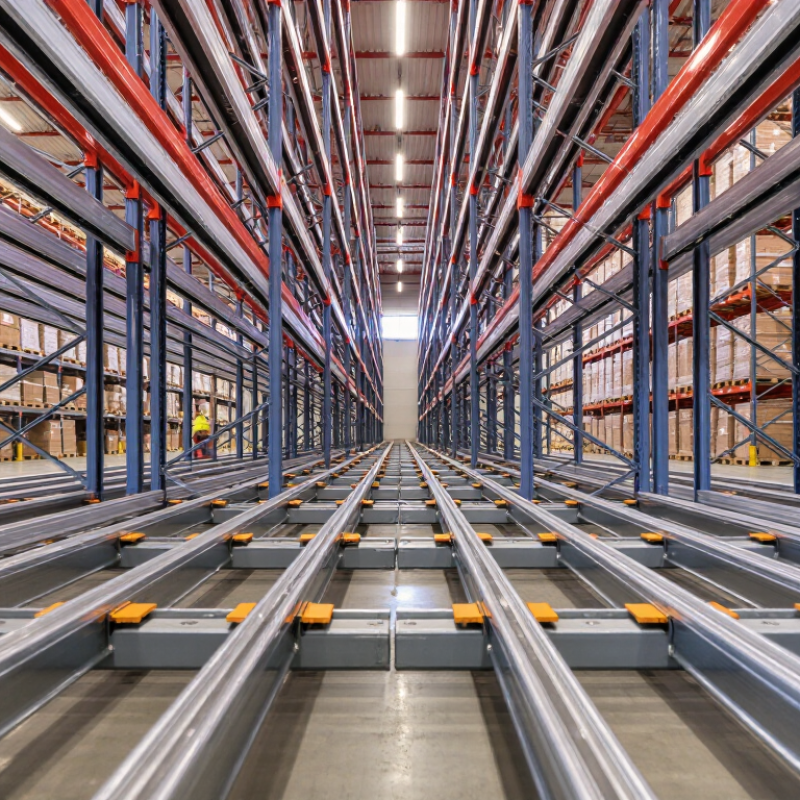
Push-back storage is a high-density pallet system that uses inclined rails and nesting carts. A forklift places each pallet on a cart, then gently pushes it toward the back of the lane. Gravity moves the carts forward when the front pallet is removed. That matters. The newest pallet usually comes out first, so this layout suits products managed on a last-in, first-out basis. Each lane typically holds one product type, helping reduce unnecessary forklift travel.
Tips: Check pallet size, load weight, and lane depth before choosing a configuration. Ask a qualified rack specialist to assess floor conditions and forklift clearances. Keep loads centered, and train operators to push pallets smoothly rather than forcefully.
The system can improve space use, but it needs careful planning. Deeper lanes may increase storage density while making stock rotation less flexible. Damaged carts, uneven loading, or debris on the rails can affect movement. Not every site. Review traffic patterns and replenishment needs alongside capacity targets; a compact layout may create bottlenecks if aisle access is limited. Regular inspections help spot worn wheels, misaligned rails, and loose components early. Even then, the best setup depends on actual warehouse conditions, not just a drawing.
China Top Push-Back Storage Racks for Global Buyers
Key Features of China-Made Push-Back Racking Systems
China-made push-back racking systems combine dense storage with faster pallet handling. They use nested carts or wheeled frames, allowing pallets to load from one aisle. This design can reduce forklift travel and preserve valuable floor space. Industry research often reports storage-density gains of 30% to 60% compared with selective pallet racking, depending on aisle width, pallet size, and warehouse height.
The key feature is gravity-assisted movement. Slightly inclined lanes let pallets move toward the operator after unloading. Proper brakes, guide rails, and reinforced frames are essential. The 2024 MHI Annual Industry Report identifies labor availability and operational efficiency as continuing supply-chain pressures. Push-back racks can address both, but only when the system matches real pallet weights and turnover patterns. A heavy-duty beam is not automatically a safe beam.
China manufacturers commonly offer adjustable beam levels, galvanized carts, powder-coated surfaces, and seismic design options. Cold-storage projects may require corrosion-resistant finishes and low-temperature testing. Buyers should request load calculations, welding inspection records, coating specifications, and independent quality reports. EN 15635 guidance also emphasizes regular rack inspections and visible load notices.
Here is the imperfect part: catalog capacity figures can look precise, yet warehouse conditions are rarely perfect. Uneven floors, damaged pallets, and inconsistent forklift operation change performance quickly. A pilot lane is often wiser than a full purchase. The U.S. Department of Labor continues to identify material-handling hazards as a major workplace concern. Good rack design must therefore include training, inspection access, and practical operating limits.
Choosing the right push-back storage rack starts with your warehouse workflow, not its appearance. Push-back systems suit last-in, first-out storage and medium-to-high pallet density. They work best when each lane stores one product type or batch. Mixed products can create picking errors.
Measure pallet width, depth, weight, and height carefully. Allow space for forklift movement and safe load placement. Rack depth should match your pallet size without forcing overhang. Select the correct lane depth, often two to six pallets deep, based on inventory turnover. Fast-moving goods usually need shallower lanes. Slow-moving goods can use deeper lanes.
Tips: Check the rack’s rated capacity at every level. Confirm rail and trolley materials before purchase. Inspect pallet quality, because damaged pallets may roll poorly. Ask a qualified engineer to review floor strength, seismic needs, and local safety requirements. Labels help, but they cannot replace training.
A common mistake is choosing maximum density too early. It may reduce aisle space and slow daily picking. Push-back racks also require consistent forklift operation. Operators should place pallets squarely and avoid sudden impacts. Test one lane with real pallets before expanding across the warehouse. The first layout is rarely perfect. Review damaged cartons, loading time, and unused space after several weeks.
China Top Push-Back Storage Racks for Global Buyers
Quality Standards and Manufacturing Considerations in China
Push-back racks demand more than a strong-looking frame. They need predictable movement, accurate loading, and stable performance under repeated use. Experienced buyers should request drawings, load calculations, steel certificates, and inspection records before production begins. These documents reveal whether the supplier controls materials or simply assembles visible parts.
Manufacturers should check upright thickness, beam deflection, welding quality, trolley alignment, and surface protection. Powder coating must cover corners and hidden areas, where rust often begins. Dimensional tolerances also matter. A small error can make carts bind inside a lane. Suppliers should test representative bays with the stated pallet weight, not an idealized laboratory load. Compliance should match the destination market, including relevant storage-rack guidance such as EN 15635 or equivalent local requirements. Certification alone is not enough. Factory processes still need verification.
Tips: Ask for a sample inspection plan. Confirm pallet dimensions, load distribution, and forklift clearances in writing. Use independent inspection before shipment when possible. Visit the production line if the project is large. Photos can hide poor weld penetration or uneven coating. We have seen specifications look complete, yet omit floor conditions and seismic requirements. That gap deserves attention. A careful supplier will discuss these weaknesses openly, even when it slows the quotation.
Practical comparison of push-back rack specifications and supplier checks. Dimensions and capacities are project-dependent; confirm them through a site survey, pallet assessment, and rack design calculations.
| Evaluation area | Typical specification or practice | Quality and manufacturing checks | Buyer consideration |
|---|---|---|---|
| Storage principle | Pallets are loaded and retrieved from the same aisle. Each new pallet pushes the previous pallet farther back on nested, inclined carts or rails; unloading allows the next pallet to roll forward. | Check that the proposed cart, rail, stop, and guide arrangement matches the specified pallet type and handling equipment. | Suitable for last-in, first-out (LIFO) storage; it does not provide first-in, first-out access within a lane. |
| Lane depth | Systems are commonly configured for multiple pallets deep; the feasible depth depends on pallet load, lane geometry, handling method, and design. | Request layout drawings showing clearances, cart positions, stops, and usable pallet positions for every lane. | Deeper lanes can improve storage density but reduce selectivity and increase operating demands. |
| Load design | Capacity must be calculated from the actual unit-load weight, pallet dimensions and condition, lane depth, number of levels, and rack configuration. | Obtain design load assumptions, member and connection details, and written confirmation of the rated capacity per pallet position and level. | Do not compare quoted capacities unless the loading assumptions and configuration are equivalent. |
| Steel and components | Rack frames and beams are commonly fabricated from structural steel. Chinese grades such as Q235 and Q355 may be specified, subject to the design and applicable project requirements. | Confirm material grade, thickness, applicable material certificates, component traceability, and whether substitutions require approval. | The grade name alone does not establish finished-rack capacity; design, fabrication, connections, and installation also matter. |
| Design standards | Depending on the destination market and contract, relevant references may include EN 15512 for adjustable pallet racking design, EN 15620 for tolerances and clearances, EN 15629 for specification, and EN 15635 for use and maintenance. | State the governing standard and edition in the purchase specification. Request calculations and documentation prepared for the actual project. | A standard reference is not, by itself, proof that a particular installation is compliant or certified. |
| Welding and fabrication | Fabrication can involve roll forming, cutting, punching, welding, and assembly. Applicable welding requirements depend on the design, process, and contract. | Review inspection procedures, weld acceptance criteria, dimensional checks, and records for critical components. Agree on any required pre-shipment inspection. | Ask how nonconforming parts are identified, corrected, and documented before shipment. |
| Surface protection | Powder coating is commonly used for indoor steel rack components. Coating system and preparation should reflect the operating environment and the agreed appearance requirements. | Specify color, surface preparation, coating requirements, and inspection method. Check for consistent coverage and damage after packing and transport. | Cold, humid, coastal, or chemically exposed environments may require a separately assessed protection system. |
| Pallet compatibility | Pallet width, depth, entry direction, bottom-board arrangement, overhang, and load stability affect support and movement through the lane. | Provide representative pallet samples or drawings and confirm loaded-pallet dimensions and weight before final design approval. | Pallet variation or damage can affect smooth movement and safe support; define acceptable pallet condition. |
| Floor and installation | Rack layout, base plates, anchors, and installation tolerances must be coordinated with the building floor and the selected lifting equipment. | Confirm floor condition and level, anchor specifications, installation drawings, and the division of responsibilities for installation and inspection. | Floor capacity and condition should be verified for the actual imposed loads; do not assume the rack supplier has assessed the building. |
| Safety and operation | Safe operation depends on approved load limits, correct pallet placement, suitable handling practices, visible load notices, and routine inspection. | Request operating and maintenance guidance, inspection criteria, and recommendations for reporting and assessing damage. | Train operators and arrange competent inspections in accordance with applicable local requirements and site procedures. |
| Export documentation | A typical project file may include approved drawings, bill of materials, capacity information, installation instructions, packing list, and agreed inspection records. | List required documents, language, drawing revision, packaging method, shipment marks, and inspection hold points in the contract. | Check local import, safety, and documentation requirements in the destination country before production. |
Note: The information above is general procurement guidance, not a substitute for project-specific engineering, local code review, or installation inspection.
China Top Push-Back Storage Racks for Global Buyers
Global Buying, Shipping, and Installation Essentials
Push-back racks can increase pallet density without sacrificing direct aisle access. For global buyers, however, the rack is only one part of the project. Confirm pallet dimensions, load weight, forklift reach, and storage temperature before requesting quotations. A 1,000-kilogram pallet needs more than a strong-looking beam. It needs tested components, clear load signage, and documented engineering calculations.
UNCTAD’s Review of Maritime Transport reports that over 80% of global merchandise trade by volume moves by sea. Shipping delays can therefore affect installation schedules. Ask the supplier for packed dimensions, container loading plans, corrosion protection, and inspection photos. The World Bank’s Logistics Performance Index 2023 compares 139 economies and highlights major differences in customs, infrastructure, and delivery reliability. Build extra time into the project. Port estimates are not guarantees.
Tips: Request drawings in millimetres, not vague “standard” sizes. Confirm whether installation hardware is included. Use an independent engineer to review anchoring and floor capacity. Provide local safety requirements before production begins. Check every carton against the packing list on arrival.
Installation teams should level the floor, inspect frames, and test each lane gradually. A practical sequence is safer than rushing to full capacity. My own caution is simple: a spreadsheet can hide site problems. One uneven slab or incorrectly measured pallet may force expensive changes. Keep a signed installation record, including torque checks, rack alignment, and final load limits.
Typical planning timeframes for international push-back rack projects, covering design confirmation, manufacturing, ocean shipping, and on-site installation. Actual schedules depend on order quantity, customization, destination, port conditions, and warehouse readiness.
Planning reference: timeframes are shown in calendar days and should be confirmed with the supplier, freight forwarder, and installation team before purchase.
Request engineering drawings, load calculations, steel certificates, and inspection records. These documents show material and process control. A complete quotation can still hide omissions.
Check upright thickness, beam deflection, weld penetration, trolley alignment, and surface protection. Inspect corners and hidden coating areas. Rust often starts there.
Suppliers should test representative bays with the stated pallet weight. Testing should reflect real pallet dimensions and load distribution. Ideal laboratory loads are not enough.
Small errors can make carts bind inside a lane. Confirm measurements in millimetres. Vague “standard” sizes create avoidable problems.
Provide pallet size, pallet weight, forklift reach, aisle clearance, floor condition, and storage temperature. Include seismic requirements when relevant. These details affect engineering.
Request packed dimensions, container loading plans, corrosion protection, and inspection photos. Build extra time into the schedule. Port estimates are not guarantees.
Compare every carton with the packing list. Inspect frames, hardware, coating, and visible damage. Missing bolts can delay installation.
Level the floor and align every frame before loading. Test each lane gradually. Record anchoring, torque checks, alignment, and final load limits.
Yes, especially for large projects. An independent inspector may notice weak welds or uneven coating. Photos can mislead. Site conditions deserve a second look.
China has become a practical sourcing destination for reliable Push-Back Storage systems designed to improve warehouse capacity and handling efficiency. These racks use inclined rails and nested pallets that move forward when loading and return smoothly when unloading, allowing multiple pallets to be stored in each lane while reducing aisle requirements. China-made systems can be customized with different load capacities, frame dimensions, trolley designs, safety features, and surface treatments to suit cold storage, manufacturing, distribution, and other warehouse environments.
Choosing the right Push-Back Storage rack requires careful evaluation of pallet size, product weight, storage depth, forklift compatibility, operating frequency, and available space. Buyers should also review material quality, welding precision, coating performance, load testing, and manufacturing consistency. For international purchasing, clear technical drawings, accurate quotations, professional packaging, shipping plans, installation guidance, spare parts support, and after-sales communication are essential. A well-planned selection and quality inspection process can help global buyers achieve safe, durable, and cost-effective warehouse storage.

Xinyi Racking