China has become a major testing ground for automated warehousing and high-density storage. According to the International Federation of Robotics’ World Robotics 2024 report, China installed 276,288 industrial robots in 2023. That figure signals strong automation capability, but it does not automatically identify the best Stacking Systems for every warehouse.
The practical choice depends on storage height, pallet weight, SKU variety, order frequency, and available floor space. Pallet racking remains flexible for mixed inventory and manual access. Shuttle systems can improve density where pallets move in batches. Stacker cranes suit tall warehouses requiring controlled, repeatable storage. Mobile robots may perform better when layouts change frequently. None is universally superior.
The China Federation of Logistics and Purchasing reported continued growth in China’s logistics activity during 2023. This growth is increasing pressure on warehouses to reduce travel distance, labor dependency, and picking errors. Small gains matter. A shorter aisle route can save thousands of equipment movements each month.
However, vendor brochures often emphasize speed without showing full operating conditions. That is a weakness. Real evaluation should examine rack tolerances, battery charging, maintenance response, software integration, fire protection, and seismic requirements. ISO 3691-4 offers useful safety guidance for driverless industrial trucks, while local Chinese standards and site inspections remain essential.
This guide compares Chinese Stacking Systems through measurable criteria, practical use cases, and reported industry evidence. It also recognizes an uncomfortable truth: the most advanced solution may be financially wrong for a smaller warehouse. Performance must be proven on the floor, not promised in a presentation.
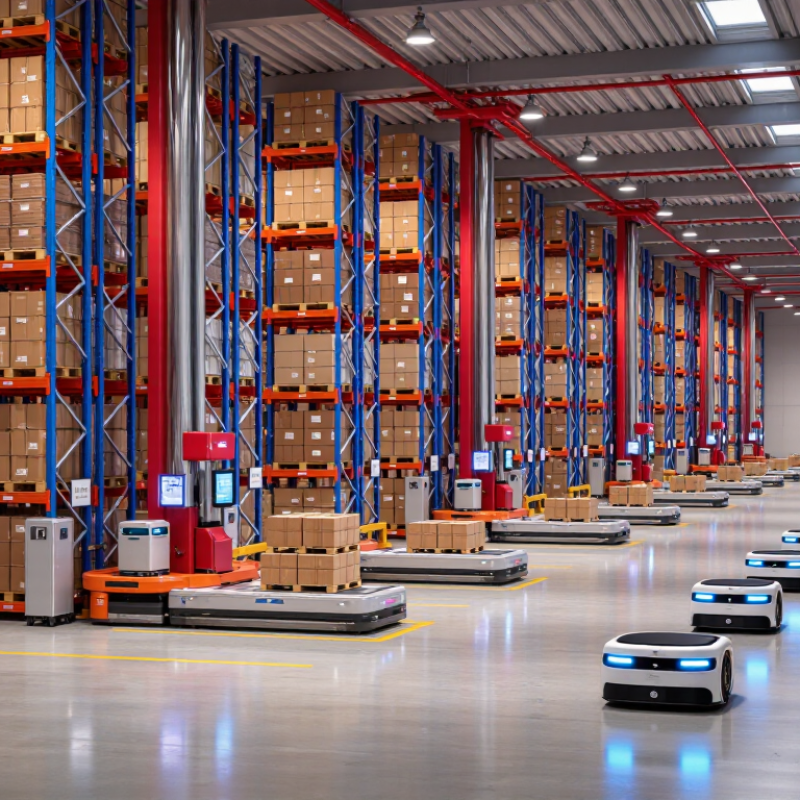
The best stacking systems from China are defined by performance, not appearance. In warehouse work, load rating is the first practical test. Each beam, upright, and connector must carry its stated capacity under real operating conditions. Clear labels should show maximum loads and safe stacking heights. Engineers should also check floor strength, pallet condition, and forklift impact risks.
Safety separates a dependable system from a cheap imitation. Strong frames need secure locking pins, stable bracing, and protection against accidental movement. Powder-coated steel can resist warehouse wear, but coating alone cannot correct poor installation. I have seen attractive racks fail because the floor was uneven. That detail is easy to overlook. The best system also matches its use, including cold storage, retail inventory, heavy pallets, or compact manual picking.
Tips: Request load-test records and installation drawings before purchase. Inspect welds, joints, and anchor points on site. Leave enough aisle space for safe turning. Recalculate capacity after changing pallet sizes or shelf levels. A qualified engineer should review unusual loads, especially long materials or uneven cartons. Do not rely only on catalog figures. Real warehouse conditions are often less predictable.
For 1,000–2,000 kg pallets, selective racking usually provides the clearest access. Each pallet has a dedicated position, simplifying stock rotation and inspections. Forklift aisles remain wider, but floor space is used less efficiently. Drive-in racking suits repeated products with limited variations. It can reach 1,500–2,000 kg per pallet position, depending on upright design and tunnel depth. Weight changes everything. A 5,000 kg pallet requires stronger beams, frames, anchors, and floor checks.
For 2,000–5,000 kg loads, automated pallet systems can reduce forklift traffic and improve repeatability. The 2024 MHI Annual Industry Report, produced with Deloitte, surveyed more than 2,000 supply-chain professionals. It reported that 55% expected to adopt robotics and automation by 2027. That figure signals growing interest, not guaranteed savings. Automated storage and retrieval systems need accurate pallet dimensions, stable wrapping, barcode discipline, and dependable maintenance. A damaged pallet can stop an entire aisle, which manual systems may avoid.
Chinese racking suppliers often provide selective, drive-in, and automated configurations for heavy industrial storage. However, buyers should verify tested load tables rather than accept a headline capacity. Check steel grades, weld quality, seismic requirements, rail tolerances, and floor loading. The FEM guidance on steel static storage equipment also stresses engineering validation and safe operating conditions. I would request a full layout using the actual 1,000–5,000 kg load, not a generic drawing. A low purchase price may hide installation limits, replacement delays, or unsuitable handling equipment. That risk deserves more attention.
Chinese stacking systems can achieve 30–60% higher storage density through vertical design and tighter space planning. The gain depends on the original warehouse layout, product size, and handling process.
Many systems use taller frames, adjustable beam levels, and narrow aisles. Some combine mobile racks with high-strength steel structures. This can turn unused ceiling space into practical storage. A warehouse with 8-meter clearance may add several storage layers without expanding its footprint. Better bin dimensions also reduce wasted gaps between cartons. Small details matter.
The percentage is not automatic.
A reliable evaluation should compare pallet positions, aisle width, load capacity, retrieval time, and maintenance access. A system may hold more goods but slow picking if the aisle becomes too narrow. That trade-off is easy to overlook. Storage density should be measured beside daily operating speed.
Tips: Measure ceiling height first. Check floor load limits. Leave safe clearance around sprinklers and lights. Test the system with real cartons, not empty samples. Ask for load calculations and installation records. Review one busy operating day before approving a full rollout.
In practical projects, modular frames often support future changes. Beam levels can move when product sizes change. However, highly customized layouts may become expensive to modify later. A careful design leaves room for imperfect forecasts, seasonal inventory, and occasional handling errors. The best system is not always the densest one. It is the one that improves capacity without making workers, equipment, or maintenance struggle.
What Are the Best Stacking Systems from China?
Selecting a stacking system from China requires more than comparing prices or warehouse photos. Steel grade is a practical starting point. Ask for material certificates, heat numbers, yield strength, and coating specifications. These records should match the delivered columns, beams, and connectors. I have seen attractive systems weakened by unclear traceability. That detail matters.
Seismic design deserves direct technical review. The supplier should provide calculations for the site’s seismic zone, soil conditions, rack height, bay loading, and anchoring method. Connections need proper bracing, base plates, and documented torque requirements. A generic “earthquake resistant” claim proves very little. It is better to request drawings signed by qualified engineers and evidence from relevant load tests. The right design may also require local engineering approval.
ISO 9001 can show controlled purchasing, welding, inspection, and corrective-action processes. However, it does not automatically certify rack strength. EN 15635 focuses on using and maintaining storage systems safely, including inspections, damage reporting, and load notices. The supplier should explain how these requirements appear in manuals and training. Check the factory process yourself when possible. Photos help, but they can hide weaknesses. A small sample audit, dimensional check, and independent inspection often reveal more than polished documents. Even experienced buyers can overlook installation quality, so commissioning records should remain part of the decision.
| Stacking System | Typical Application | Common Structural Steel | Seismic Design Considerations | ISO 9001 Evaluation | EN 15635 Considerations | Overall Suitability |
|---|---|---|---|---|---|---|
| Selective Pallet Racking | General warehouses requiring direct access to every pallet. | Q235/Q355 under GB/T 1591 or equivalent S235/S355 grades under EN 10025, subject to the approved design. | Check anchorage, frame bracing, beam-to-upright connections, rack slenderness, and local seismic requirements. A site-specific calculation is required. | Prefer suppliers with a current ISO 9001 certificate covering design, fabrication, and quality control. Certificate scope and validity must be verified. | Requires installation inspection, load notices, regular visual inspections, damage reporting, and competent-person assessment. | Best general-purpose option when accessibility is the priority. |
| Double-Deep Pallet Racking | Higher storage density with access from the aisle using reach equipment. | Typically Q355 or S355 for primary load-bearing members where required by calculation; exact grade depends on section design and manufacturer specifications. | Requires verification of increased frame loads, aisle stability, seismic bracing, anchoring, and equipment clearance during seismic movement. | Quality-system certification is useful for controlling repeated frame production, welding, coating, dimensional checks, and traceability. | Inspection must include rear-position visibility, pallet overhang, beam deflection, frame damage, and safe loading procedures. | Suitable where density is more important than full pallet selectivity. |
| Drive-In / Drive-Through Racking | High-density storage for homogeneous products with limited stock rotation. | Q235/Q355 or S235/S355 equivalents may be used according to member function, corrosion exposure, and structural calculations. | Requires careful analysis of rack continuity, aisle-end stability, guide-rail forces, impact protection, anchorage, and seismic load paths. | ISO 9001 status should be confirmed for manufacturing controls, weld inspection, coating quality, and dimensional consistency. | Regular inspection is essential because forklift impact, rail damage, and hidden component deformation can reduce rack capacity. | Best for maximum density, but less suitable for mixed products and frequent rotation. |
| Push-Back Pallet Racking | LIFO storage with multiple pallets stored along inclined carrier rails. | Primary frames commonly use Q235/Q355 or equivalent grades; rails, carts, and connections require separate load verification. | Evaluate longitudinal forces, cart acceleration, rail restraint, frame anchoring, and seismic interaction between stored pallets and carriers. | An ISO 9001 certificate should be supported by documented testing and inspection of rails, carts, welds, and moving components. | Inspection should cover rail alignment, cart operation, pallet condition, impact damage, clearances, and load signage. | Good density-to-accessibility balance for controlled product groups. |
| Pallet Flow Racking | FIFO storage for high-throughput goods using gravity rollers or wheel tracks. | Structural members may use Q235/Q355 or S235/S355 equivalents; roller tracks and braking components require application-specific verification. | Assess frame stability, track restraint, pallet movement, seismic displacement, end stops, and protection at loading and unloading faces. | ISO 9001 evidence should include process control for fabrication, track installation, braking components, and functional testing. | EN 15635-based inspections should include rollers, brakes, guides, stops, pallet overhang, and rack upright damage. | Strong option for FIFO operations and high stock turnover. |
| Mobile Pallet Racking | High-density storage where powered mobile bases create a limited number of access aisles. | Racking frames commonly use Q235/Q355 or equivalent grades; mobile bases require additional structural and mechanical verification. | Requires evaluation of rail anchoring, mobile-base stability, emergency stopping, interlocking, anti-tip measures, and seismic displacement. | ISO 9001 controls should cover structural fabrication, electrical systems, safety interlocks, commissioning, and maintenance documentation. | Inspection must cover rails, drive units, safety sensors, interlocks, end stops, emergency controls, and rack damage. | Best where floor-space efficiency is critical and access frequency is moderate. |
| Cantilever Racking | Long, bulky, or irregular goods such as pipes, timber, profiles, and panels. | Columns and arms may use Q235/Q355 or S235/S355 equivalents, with capacity determined by cantilever moment and connection design. | Check overturning resistance, base anchorage, arm connections, longitudinal bracing, stored-load restraint, and seismic lateral forces. | ISO 9001 certification should cover welding, base fabrication, arm alignment, coating, and load-capacity documentation. | Inspection should focus on column plumbness, arm deformation, anchors, bracing, load distribution, and end restraints. | Best for long loads that cannot be stored efficiently on pallet racks. |
Choosing the Right Chinese Stacking System by Space, Budget, and Throughput
The best Chinese stacking system depends on your floor area, operating budget, and daily vehicle volume. A compact parking lift suits narrow urban sites with limited construction options. It uses vertical space, but requires careful ceiling measurements and safe access routes. Measure beams, lighting, sprinklers, and vehicle height before requesting prices. Small errors can become expensive changes.
Budget affects more than the purchase price. Check steel thickness, motor capacity, control systems, installation support, spare parts, and maintenance training. A cheaper system may look attractive, but weak documentation can slow repairs. Ask for load tests, safety certifications, inspection records, and clear warranty terms. Local service capability also matters. Downtime costs money.
Throughput changes the decision again. A residential project may need simple, reliable movement with modest daily use. A busy commercial site needs faster cycling, clearer controls, and stronger protection against repeated operation. I have found that real traffic observations are more useful than optimistic capacity claims. Count peak arrivals, parking duration, and retrieval delays. Leave operating space around each unit. This is often overlooked.
No system is perfect. A higher budget can improve reliability, but it cannot fix poor layout planning. A detailed site survey should guide the final choice, not a sales brochure. Share drawings, vehicle dimensions, climate conditions, and expected usage with qualified technical reviewers before approval.
Reliable systems match load capacity, warehouse conditions, and intended use. Appearance is not enough. Clear labels should show maximum loads and stacking heights.
Request tested load tables, material certificates, and installation drawings. Use actual pallet weights and dimensions. Catalog figures alone can mislead.
Selective racking offers direct access to each pallet. It supports easier inspections and stock rotation. However, it uses more floor space.
Drive-in racking suits repeated products with limited variation. It can support roughly 1,500–2,000 kg per pallet position, depending on design.
Heavy loads require stronger beams, uprights, anchors, and floors. Engineers should check pallet stability and forklift impact risks. Weight changes everything.
Look for locking pins, stable bracing, secure anchors, and movement protection. Powder coating helps resist wear, but it cannot fix poor installation.
Very important in seismic areas. Review site conditions, rack height, bay loading, anchoring, bracing, and qualified engineering calculations.
No. It indicates controlled quality processes, not automatic structural strength. Check welds, dimensions, material records, and independent inspection results.
They need accurate pallet dimensions, stable wrapping, reliable barcodes, and regular maintenance. One damaged pallet can stop an entire aisle.
Do not focus only on price or polished photos. Uneven floors, changing pallet sizes, and narrow aisles can create serious practical problems. I might overlook them too.
The best Stacking Systems from China are defined by a balance of load capacity, safety, flexibility, and cost efficiency. Systems designed for 1,000–5,000 kg loads may include selective racking for direct pallet access, drive-in racking for high-density storage, and automated solutions for faster, more accurate warehouse operations. By optimizing vertical space, aisle layouts, and pallet positioning, well-designed systems can increase storage density by approximately 30–60% while maintaining practical access and workflow efficiency.
When evaluating a Chinese stacking system, buyers should examine steel grade, structural durability, seismic design, manufacturing quality, and certifications such as ISO 9001 and EN 15635 compliance. The right choice depends on available floor space, budget, inventory type, required throughput, and safety priorities. A careful comparison of load ratings, installation requirements, maintenance needs, and future expansion potential can help businesses select a reliable system that improves capacity without compromising operational control or workplace safety.

Xinyi Racking