| Boltless Rivet Shelving |
Adjustable, hand-loaded shelving with beams that connect to upright frames using rivet-style connectors. |
Cartons, tools, small parts, and general warehouse or workshop storage. |
Often about 150–1,000 lb (68–454 kg) per shelf, depending on the design and load distribution. |
Adjustable shelf heights; relatively quick assembly; suitable for many manually handled goods. |
Confirm that beams are fully engaged and the unit is assembled and anchored as required. Capacity depends on shelf construction and span. |
| Steel Clip Shelving |
Modular steel shelves supported by clips, brackets, or formed uprights; commonly available in open or closed configurations. |
Maintenance areas, stockrooms, parts rooms, and storage of packaged or boxed items. |
Commonly around 200–1,000 lb (91–454 kg) per shelf, with substantial variation by model. |
Durable, configurable, and available with solid shelves that help contain small items. |
Check whether the stated rating assumes evenly distributed loads. Uneven or concentrated loads may reduce usable capacity. |
| Longspan Shelving |
Wide-span, manually accessed shelving with heavy-duty beams and adjustable levels; often used between light shelving and pallet racking. |
Bulky cartons, furniture components, larger parts, and hand-loaded goods that need wider bays. |
Frequently about 500–2,000 lb (227–907 kg) per level, subject to beam length and configuration. |
Provides wider storage openings and can accommodate large items without requiring pallet-handling equipment. |
Longer spans can lower capacity. Select the frame, beam, and decking ratings together for the planned load. |
| Wire Shelving |
Open-grid shelves mounted on posts, commonly with adjustable shelf heights. |
Parts, supplies, containers, and inventory in areas where visibility and airflow are useful. |
Often about 200–800 lb (91–363 kg) per shelf, depending on shelf dimensions and support design. |
Allows airflow and visibility; open construction can help reduce dust accumulation on shelves. |
Small items may need bins or shelf liners. Check suitability for the environment and the required load rating. |
| Bin Shelving |
Shelving arranged with compartment bins, dividers, or drawers for organizing small items. |
Fasteners, components, repair parts, and other small inventory managed by item or stock-keeping unit. |
Varies by shelf and bin; shelving commonly falls in the light- to medium-duty range. |
Supports sorting, labeling, and quick identification of small parts. |
Include the weight of bins and contents in the shelf load. Check that bins fit securely and remain accessible. |
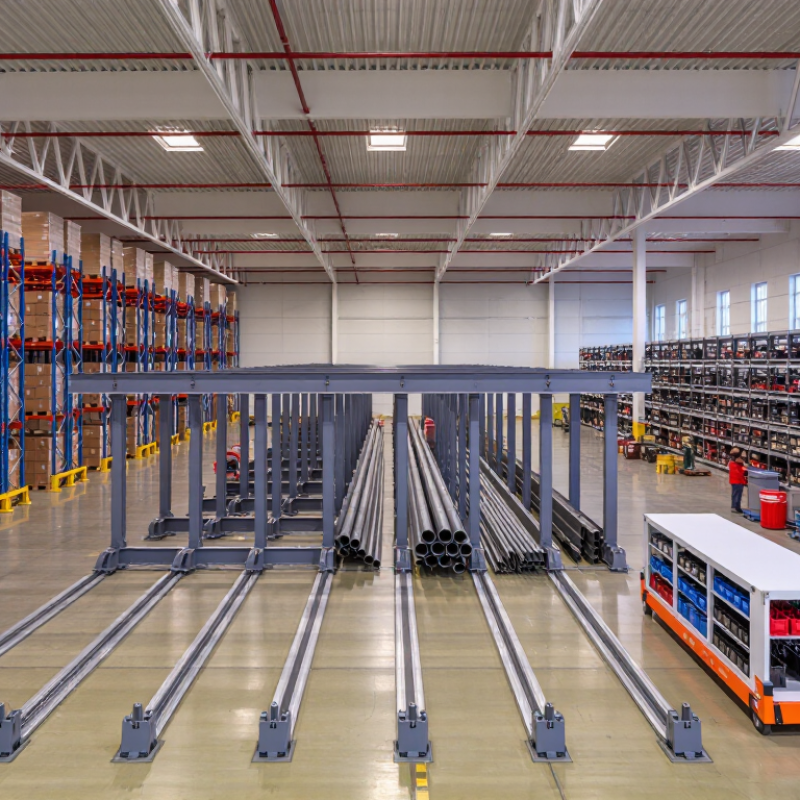
| Cantilever Shelving |
Open-front storage system using vertical columns and projecting arms, with no front uprights obstructing the load. |
Long or awkward materials such as pipe, lumber, bar stock, and sheet goods. |
Capacity is rated by arm and column; it varies widely with arm length, column height, and system design. |
Provides unobstructed front access and can store long items efficiently. |
Loads must be placed within the rated arm and system limits. Consider stability, load retention, and suitable handling equipment. |
| Mobile Shelving |
Shelving mounted on movable carriages that travel on floor tracks or guided systems to open an access aisle. |
Parts, files, tools, and inventory where floor space is limited and access can be planned by aisle. |
Depends on the shelving and carriage system; capacity must be verified for the complete installed assembly. |
Can increase storage density by reducing the number of permanently open aisles. |
Requires suitable flooring, clearances, and safety controls. Access is typically available to one or a limited number of aisles at a time. |
| Pallet Rack |
Beam-and-upright storage designed for palletized loads and typically accessed by forklifts or other material-handling equipment. |
Palletized inventory, bulk stock, and warehouse loads stored at multiple elevations. |
Rated per beam level and frame; allowable capacity depends on the rack design, configuration, and load conditions. |
Uses vertical space and provides organized access to palletized goods. |
Follow the system’s posted load limits and applicable safety requirements. Installation, changes, and damage inspections matter. |
 Xinyi Racking